By the pyreneestravel.com team · Updated 10 October 2026 · Planning
The border runs along the crest, and the two sides feel surprisingly different. The good news: you don't have to choose, as passes and tunnels link them.
Landscape and weather
The French side is steeper, greener and wetter, with deep valleys, forests and big waterfalls facing the Atlantic weather. The Spanish side is sunnier and drier, with canyons, limestone walls and long, gentle slopes down to the plains of Aragón and Catalonia.
Food and rhythm
France means set lunch menus, garbure, duck and mountain cheese, and dinner from 19:30. Spain means tapas, late lunches around 14:00 and dinner after 21:00.
Highlights by side
- France: Gavarnie, Pic du Midi, Pont d'Espagne, Lourdes, Cathar castles, the Basque villages.
- Spain: Ordesa, Aigüestortes, Benasque and Aneto, the Val d'Aran, Romanesque churches, Jaca.
- Andorra: big skiing, shopping and spas.
Prices
The Spanish side and Andorra are often a little cheaper for food and lodging, though popular resorts are pricey everywhere in peak season.
How to combine
Key crossings include the Portalet and Somport passes, the Bielsa and Vielha tunnels, Andorra's Envalira tunnel, and the coastal routes at each end. Our 7-day itinerary shows a loop through both.
Plan your Pyrenees trip
Hotels, tours and transport in one place.
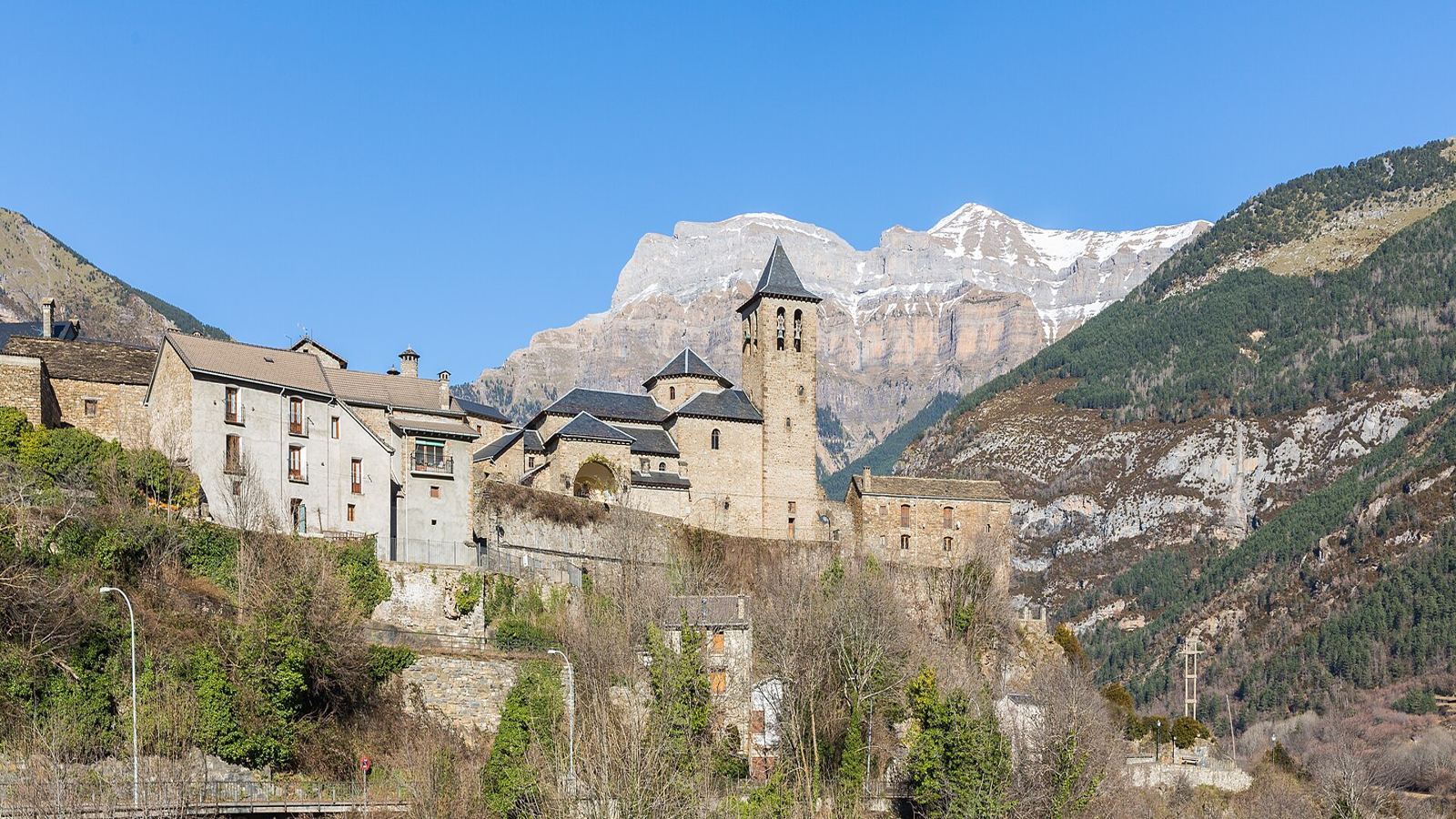
Header photo: Photo: Diego Delso, CC BY-SA 4.0
Some links on this page are affiliate links. If you book through them we may earn a small commission at no extra cost to you. Learn more.